
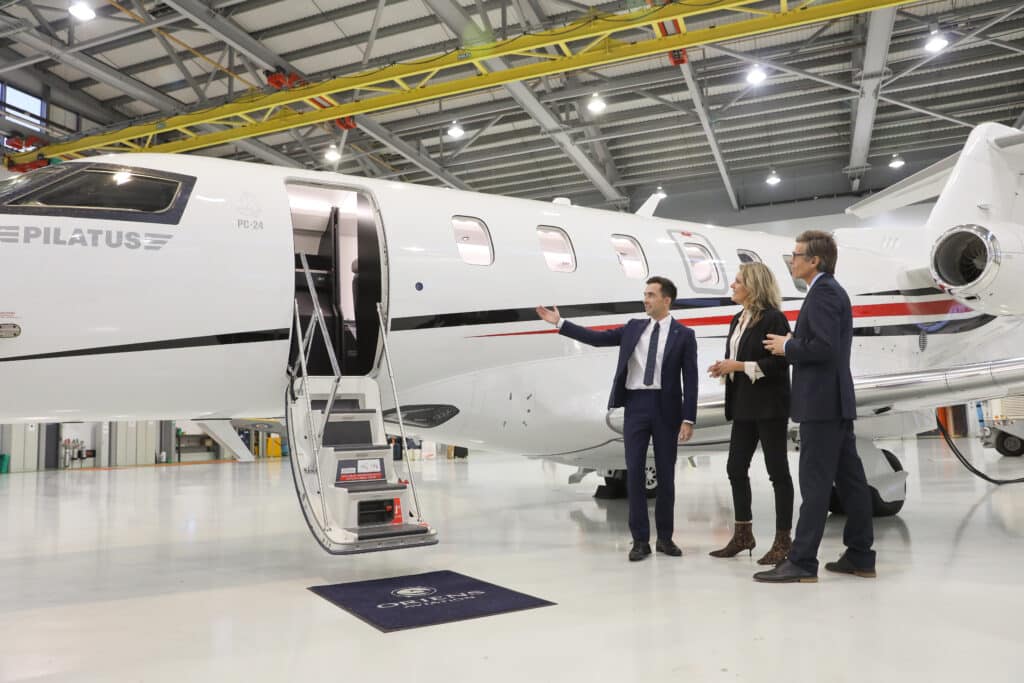
Buying your first aircraft is a defining milestone in any owner’s journey. It’s a transition from charter to the ultimate “gateway to freedom,” where the sky truly becomes your own with your own aircraft. However, the initial excitement is often followed by a complex question: should you buy new or pre-owned?
For first-time buyers, the choice can feel overwhelming. A new aircraft offers the latest technology and factory protection, while a pre-owned model provides a lower entry price and potentially slower depreciation. At Oriens Aviation, we believe aviation is more than just transportation. It’s a gateway to adventure and time well spent. Our goal is to ensure your purchasing journey is seamless and hassle-free.
In this guide, we’ll break down the practicalities of aircraft ownership. We’ll look at the financials, the “90% rule” for missions, and the unique factors that affect owners in the UK and Ireland. Whether you’re looking for a versatile turboprop or a jet, understanding these trade-offs is the first step toward a successful purchase.
New vs. pre-owned aircraft: Defining the choice
The choice between a new-build and a pre-owned aircraft is rarely just about the purchase price. It’s about balancing your operational requirements with your personal preferences.
Factory-new aircraft are essentially “made to order.” They come with engine hours at delivery, comprehensive factory warranties, and the latest technology. Pre-owned aircraft naturally come with a history. That history can be a treasure trove of well-documented care or a series of expensive surprises hidden behind a fresh coat of paint. Buying used is often a more accessible path for first-time owners, allowing you to acquire more aircraft for your budget.
The key thing to remember is that ownership should be easy. Our ethos at Oriens Aviation is to make aircraft ownership simple and hassle-free by reviewing all documentation and advising you accordingly on all findings.
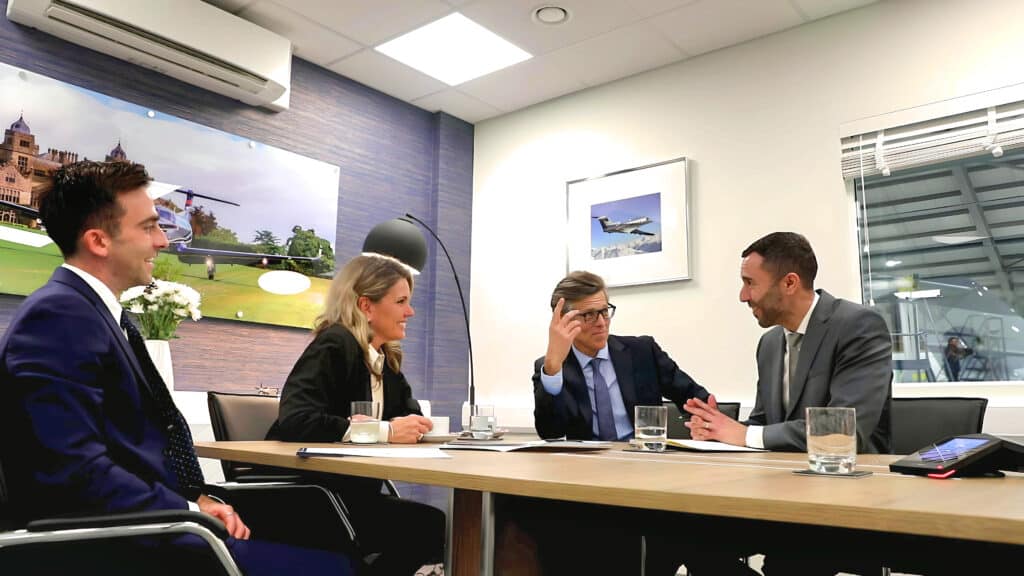
Defining your mission profile: The 90% rule
One of the most common mistakes for first-time buyers is purchasing an aircraft for a mission they only fly once a year. It’s easy to get caught up in the “ramp appeal” of a fast, complex aircraft, but if your typical flight is a local hop with one passenger, that complexity becomes an unnecessary burden.
The 90% rule
We recommend following the 90% rule: buy an aircraft that meets your needs 90% of the time, and rent or charter for the remaining 10%. If you occasionally need to take the whole family across the continent, it’s often more economical to charter a larger jet for those specific trips rather than paying for the “empty seats” on every local flight.
Range and payload
Be realistic about your typical flight loading and trip distances. An aircraft with a 1,765 nm range like the Pilatus PC-12 is incredible, but if you only ever fly 100-mile hops, you’re carrying a lot of extra capability. Conversely, ensure your “useful load” accounts for both passengers and fuel. Many four-seat aircraft cannot actually carry four adults with full fuel tanks.
Runway capability
In the UK and Ireland, your mission might include operating from smaller regional airports or even unpaved grass strips. Not every aircraft is suited for these environments. The Pilatus PC-12 PRO is a standout here, designed to access more than 21,300 runways globally, including those with unpaved surfaces. This versatility opens up locations that are inaccessible to many larger business jets.

Financial breakdown: Purchase price, depreciation, and operating costs
The financial commitment of owning an aircraft extends far beyond the initial check you write at closing. To understand the true cost, you must look at the total “cost of ownership” over several years.
Acquisition costs
Factory new aircraft will all have their required purchase price. At Oriens Aviation, we work with prospective Buyers to make sure they are fully aware and understanding of the initial purchase costs.
Depreciation curves
New aircraft typically experience a steeper initial depreciation in the first few years. However, high-demand models like the PC-12 are industry leaders in residual value. On average, a 10-year-old Pilatus PC-12 can retain close to 80% of its original purchase value, making it a remarkably stable asset compared to many midsize jets that depreciate 5% to 10% annually.
Fixed vs. variable costs
Your budget needs to account for both fixed costs (what you pay even if the aircraft never moves) and variable costs (what you pay per flight hour).
- Fixed costs: Hangar fees, insurance premiums, and annual inspections. In places like London Biggin Hill, hangar space is a premium consideration.
- Variable costs: Fuel, airport/landing fees, and reserves for engine overhauls.
Local considerations
For owners in the UK and Ireland, VAT and regulatory fees are critical factors. Depending on whether the aircraft is used for business or pleasure, the tax implications can significantly change the net cost of the purchase. We always recommend consulting with a specialist to structure the acquisition correctly, and we work with prospective buyers to recommend trusted partners for this.
Maintenance and warranty: The hidden value of factory support
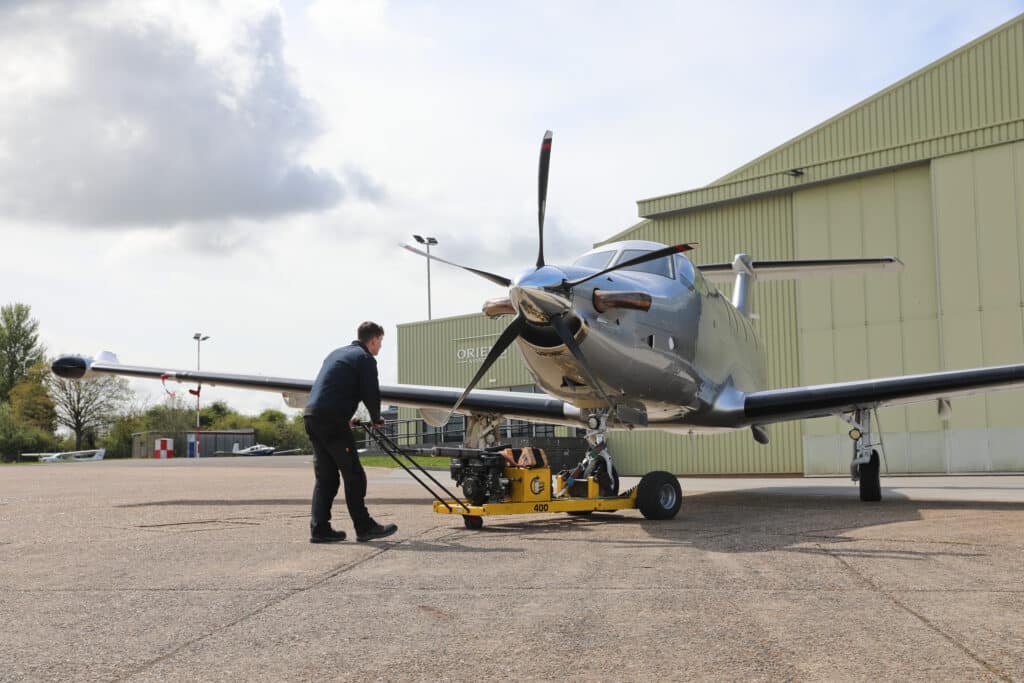
Maintenance requirements are key factors in determining whether a new or pre-owned aircraft is the right purchase for you.
The warranty advantage
Manufacturers like Pilatus and Tecnam provide warranties that cover most defects for the first few years of operation. This allows you to accurately forecast maintenance costs and provides “dispatch reliability”—the confidence that the aircraft will be ready when you are.
The pre-purchase inspection (PPI)
For pre-owned aircraft, the PPI is your protection. This is a comprehensive mechanical review by a technician who knows the specific make and model. A good PPI will uncover hidden issues like corrosion, pending engine overhauls, or compliance gaps with Airworthiness Directives (ADs).
Support networks
As the authorised Pilatus Service Centre for the UK and Ireland, our Oriens Maintenance team at London Biggin Hill provides factory-approved support that keeps your aircraft at peak performance.
Parts availability
Sourcing parts for a modern aircraft is straightforward through authorised channels. For legacy aircraft, you may find yourself waiting weeks for a specific out-of-production part. This downtime is a hidden cost of used ownership that many first-time buyers overlook. If you are operating charter, any time on the ground becomes lost revenue.
The UK and Ireland landscape: Navigating local regulations and support.
Operating an aircraft in the British Isles involves navigating a specific regulatory environment. Since the transition between EASA and UK CAA requirements, first-time owners need to be particularly diligent about compliance. Oriens Aviation is well versed in navigating multiple registry and compliance requirements.
Management vs. DIY
Many new owners start with a “DIY” approach, managing their own hangar, insurance, and maintenance scheduling. However, this can quickly turn into a part-time job. Professional aircraft management is often the secret to a smooth ownership experience. We provide a 360-degree service that takes care of everything from flight planning to crew management, allowing you to enjoy the benefits of flight without the administrative headache.
Making the right choice with Oriens Aviation
The decision to buy new or pre-owned aircraft depends on your mission, your budget, and your desire for simplicity. New aircraft offer the ultimate in reliability and technology, while pre-owned models can provide incredible value for those willing to do the due diligence.
At Oriens Aviation, we’re uniquely positioned as a “one-stop shop” for private aviation in the UK and Ireland. Whether you’re looking for the versatility of the Pilatus PC-12, the efficiency of a Tecnam single-engine aircraft, or a jet aircraft, our team is here to guide you.
If you’re ready to explore the possibilities of ownership, contact us today for a bespoke consultation or browse our current aircraft sales inventory.
Frequently Asked Questions
What is the main financial advantage when you buy new or pre-owned aircraft?
Buying new offers predictable maintenance costs through factory warranties and the latest fuel efficiency, while buying pre-owned provides a significantly lower initial purchase price and often a flatter depreciation curve after the first few years.
How does the 90% rule help me decide to buy new or pre-owned aircraft?
The 90% rule encourages you to buy an aircraft that fits your primary, everyday mission. We encourage buyers to purchase an aircraft that fits 90% of their intended missions, rather than focussing on irregular missions, rendering their ownership experience .etter value for your needs.
Are there specific UK tax benefits when you buy new or pre-owned aircraft for business?
Yes, business owners may qualify for specific depreciation allowances and VAT recovery when an aircraft is used primarily for corporate travel. However, the rules differ between new and used assets, so it is essential to consult with an aviation tax specialist in the UK or Ireland.
Why is a pre-purchase inspection so important when you buy new or pre-owned aircraft?
While a PPI is primarily for used aircraft to identify hidden mechanical issues and logbook gaps, even some ‘nearly new’ or ‘delivery time’ aircraft benefit from a professional second set of eyes to ensure all factory standards and local UK CAA requirements are fully met before closing.